
Inconsistent hot water is usually caused by a faulty thermostat, a failing heating element, sediment buildup in the tank, a malfunctioning tempering valve, or a gas continuous flow system that cannot maintain stable output. The fix depends on which component is responsible and what type of hot water system you have.
Adelaide homes with ageing storage systems and hard water conditions experience this problem more frequently than most. Servicing homes across the Adelaide metropolitan area, Exceed Plumbing diagnoses and repairs inconsistent hot water across all system types. This guide covers why it happens, how each system type is affected, what you can check yourself, and when to call a licensed plumber.
What Makes Hot Water Inconsistent
Consistent hot water depends on three things working together: a stable heat source, a correctly functioning thermostat, and an unobstructed path from the system to your taps. When any of these breaks down, the water temperature becomes unreliable.
I have been diagnosing inconsistent hot water across Adelaide for years, and it is one of the most frustrating problems homeowners face because the symptoms seem random. The water is fine one minute and lukewarm the next, or scalding in the morning and cold by evening. But there is always a cause. The key is matching the symptom pattern to the right component.
Under current Australian plumbing standards, storage systems must maintain water at a minimum of 60°C to prevent Legionella bacteria growth, while tempering valves must limit delivery to 50°C at bathroom taps. A system that cannot hold stable temperature is not just inconvenient. It may also be a compliance and safety issue.
Common Causes of Inconsistent Hot Water
Each cause produces a slightly different symptom pattern, and knowing which pattern matches your experience helps pinpoint the problem before a plumber arrives:
Faulty or Drifting Thermostat
The thermostat monitors tank temperature and tells the heating element or burner when to activate. Over time, thermostats lose accuracy and drift from their set point. A thermostat that reads 5°C too low will overheat the water.
One that reads too high will underperform. The result is water temperature that varies from cycle to cycle without any change in your usage. Only a licensed plumber should adjust or replace a hot water system thermostat.
Failing Heating Element (Electric Systems)
Electric storage systems use one or two heating elements. When one element fails, the system heats at reduced capacity and cannot maintain consistent temperature across the full tank volume.
You may notice hot water that starts strong but drops off quickly, or water that is warm but never reaches full heat. This is one of the most common causes of inconsistent hot water in older Adelaide electric systems.
Sediment Buildup in the Tank
Minerals like calcium and magnesium settle at the bottom of storage tanks over time, forming a layer of sediment. This layer insulates the water from the heating element, forcing the system to work harder and longer.
Adelaide’s moderately hard water (calcium carbonate levels between 140 and 220 mg/L) accelerates this process. A tank with heavy sediment heats unevenly, producing inconsistent temperatures from one use to the next.
Malfunctioning Tempering Valve
The tempering valve blends stored hot water (60°C or above) with cold water to deliver a safe 50°C at bathroom outlets. When the thermostatic element inside the valve wears out or scale builds up around it, the blend ratio becomes unpredictable. You get bursts of very hot water followed by lukewarm or cold output.
Under current Australian plumbing standards, tempering valves must be tested every 12 months and replaced approximately every five years. Most Adelaide homeowners are not aware of this requirement.
Broken Dip Tube
The dip tube directs cold incoming water to the bottom of the tank for heating. When it cracks or breaks, cold water enters near the top and mixes with the heated supply. The result is intermittent cold bursts during use that feel completely unpredictable. Dip tube failure is common in systems older than 10 years and is frequently misdiagnosed as a thermostat or element issue.
Gas Continuous Flow System Cycling
Gas continuous flow (instantaneous) systems heat water on demand using a gas burner. Each system has a minimum flow rate required to activate the burner. If the flow at the tap falls below this threshold, the burner switches off. When flow increases again, it reignites.
This on-off cycling produces noticeable temperature swings during use. Running multiple hot water outlets at the same time can also exceed the system’s capacity, causing inconsistent output across all fixtures.
Off-Peak Electric Tariff Limitations
Many Adelaide homes with electric storage systems are connected to SA Power Networks off-peak tariffs. These systems only heat during designated overnight hours. If household demand exceeds what the tank can store after a single heating cycle, there is no mid-day recovery.
The water gets progressively cooler throughout the day, creating inconsistent temperature depending on when you use it.
Diagnostic Table: Matching Symptoms to Causes
| Symptom Pattern | Likely Cause | System Type |
| Temperature varies cycle to cycle, no pattern | Thermostat drift | Electric or gas storage |
| Hot at first, drops off quickly | Failed element or sediment | Electric storage |
| Random hot and cold bursts | Tempering valve or dip tube | Any storage system |
| Temperature swings during use | Continuous flow cycling | Gas continuous flow |
| Hot in morning, lukewarm by afternoon | Off-peak tariff or undersized tank | Electric storage |
| Lukewarm at all taps, never fully hot | Thermostat set too low or element failure | Electric storage |
| Inconsistent burner flame | Gas pressure or burner issue | Gas storage or continuous flow |
How Each Hot Water System Type Is Affected
The type of system you have determines how and why the temperature becomes inconsistent, and each type has different vulnerabilities:
Electric Storage Systems
The most common system in Adelaide’s older suburbs. Vulnerable to element failure, thermostat drift, sediment buildup, and off-peak tariff limitations.
Homes in Burnside, Mitcham, Goodwood, and Colonel Light Gardens commonly have electric storage systems that are 10 to 15 years old. At this age, multiple components begin failing simultaneously, making inconsistency the first noticeable symptom.
Gas Storage Systems
Faster recovery than electric but still vulnerable to thermostat issues, sediment buildup, and burner problems. An inconsistent burner flame (yellow, flickering, or uneven) indicates a gas supply issue, blocked burner, or ventilation problem.
All require a licensed gas fitter to diagnose. Homes with gas connections in Norwood, Prospect, and Magill commonly have gas storage systems.
Gas Continuous Flow (Instantaneous)
No tank means no sediment or element issues. However, continuous flow systems are sensitive to flow rate, gas pressure, and simultaneous demand. Temperature inconsistency typically manifests as cycling (burner switching on and off) or as reduced output when multiple outlets draw hot water at the same time. Minimum flow rate issues are especially common with low-flow showerheads and restrictive tapware.
Heat Pump Systems
Heat pumps extract warmth from ambient air and use it to heat water. They are highly efficient but heat slowly compared to electric element or gas systems. In Adelaide Hills suburbs like Stirling and Blackwood where winter temperatures drop below 5°C, heating times extend significantly. If the tank is undersized for the household or the heat pump cannot keep up with demand in cold weather, water temperature drops between uses.
More: Why Does My Shower Go Hot and Cold?

What You Can Check Before Calling a Plumber
These checks take less than 15 minutes and help you describe the problem accurately when you call, saving time and ensuring the plumber arrives with the right approach:
Note When the Inconsistency Happens
Does the water start hot and go cold? Is it inconsistent at all times? Does it only happen at certain taps? Does it worsen when multiple outlets are used? The pattern tells the story. Write down what you observe over two to three days so you can describe it clearly.
Test Hot Water at Multiple Taps
Run the hot tap at the kitchen sink, bathroom basin, and shower separately. If inconsistency only affects one fixture, the issue may be a local mixer valve or tempering valve rather than the hot water system itself. If all taps are inconsistent, the system is the source.
Check the Thermostat Setting
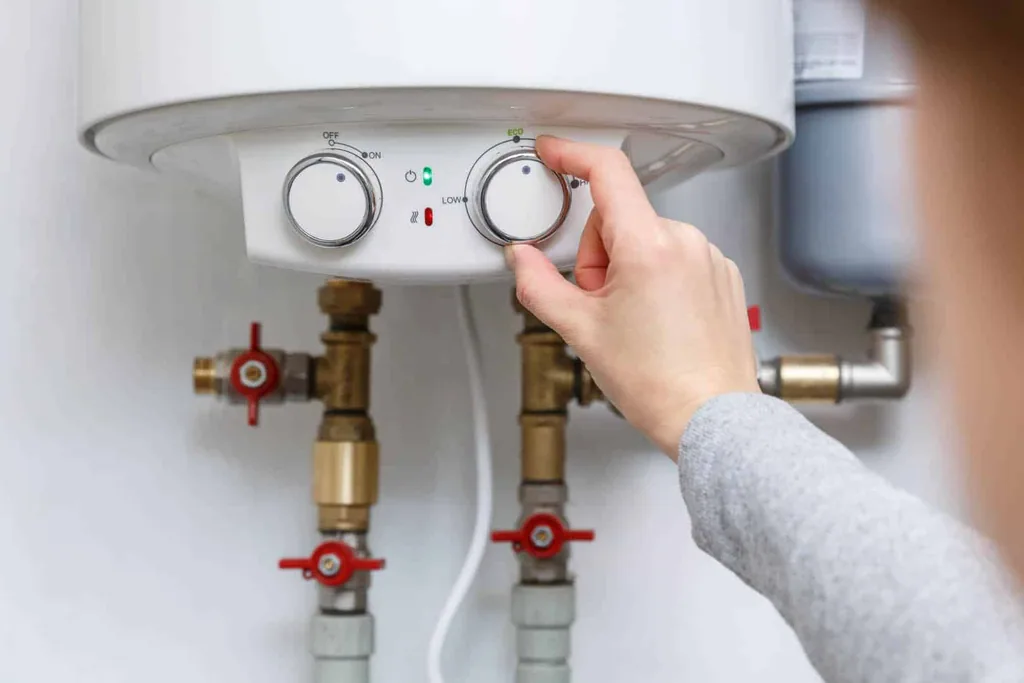
Most storage systems have a thermostat dial or digital display. Under current Australian plumbing standards, the tank must store water at a minimum of 60°C. If the setting has been bumped or adjusted, the system may not be heating to the correct temperature. Do not adjust the thermostat yourself. Only a licensed plumber should make changes.
Listen to Your System
For gas systems, listen for the burner igniting and shutting off during hot water use. Frequent cycling indicates a flow rate or gas pressure issue. For electric systems, check the circuit breaker. A tripped breaker means the system has not been heating, which explains why the water is inconsistent.
Check the Age of Your System
Most storage hot water systems last 8 to 12 years. If your system is past 10 years, multiple components are likely degrading simultaneously. Inconsistent temperature is often the first symptom of a system approaching end of life.
How a Licensed Plumber Fixes Inconsistent Hot Water
The fix depends on the diagnosis, and a thorough inspection by a licensed plumber covers all potential causes in a single visit rather than guessing at components one at a time:
Test and Replace the Thermostat
A plumber will test the thermostat accuracy and replace it if it has drifted beyond acceptable range. This restores consistent temperature regulation and ensures the system meets current Australian plumbing standards.
Replace Failed Heating Elements
For electric systems, the plumber tests each element for continuity and output. A failed element is replaced, restoring the system’s full heating capacity. In dual-element systems, both elements should be tested even if only one has failed.
Flush the Tank to Remove Sediment
Draining and flushing the tank removes accumulated sediment from the bottom, restoring direct contact between the heating element and the water. This improves heating efficiency and consistency. Annual flushing is recommended for all storage systems in Adelaide’s hard water areas.
Test and Replace the Tempering Valve
The plumber tests the tempering valve output temperature and replaces it if the thermostatic element has worn out or if scale has compromised its function. This resolves the random hot and cold bursts that a faulty valve produces.
Inspect and Replace the Dip Tube
If dip tube failure is suspected, the plumber inspects the tube for cracks or breaks. A broken dip tube allows cold water to mix with the heated supply near the top of the tank, producing the unpredictable cold bursts that are often mistaken for thermostat or element issues.
Assess System Sizing and Recommend Upgrades
If the system is undersized for your household or has reached end of life, the plumber can recommend a replacement. Options include a larger storage tank, a gas continuous flow system, or a heat pump that suits your household’s demand pattern and energy source.
In South Australia, all hot water system work must be performed by a licensed plumber under the Plumbers, Gas Fitters and Electricians Act 1995. A certificate of compliance (eCoC) must be issued within seven days, as outlined by the SA Office of the Technical Regulator.
Recently, the team and I attended a callout for an Adelaide homeowner whose hot water issue had gone undiagnosed by previous tradies. Tamara shared this feedback: “Attended swiftly to diagnose and fix an issue that had not been diagnosed by previous tradies, in a professional manner. He was willing to explain things and provide advice. Will certainly use again.” At Exceed Plumbing, getting the diagnosis right the first time is what sets us apart.
How to Prevent Inconsistent Hot Water
Most hot water consistency problems are entirely preventable with regular maintenance, informed system management, and a few simple habits that protect your system long term:
Schedule Annual Hot Water System Servicing
A licensed plumber should inspect the thermostat, test the heating elements, check the anode rod, test the tempering valve, and flush the tank annually. This single maintenance visit catches problems before they affect your hot water consistency. At Exceed Plumbing, we recommend annual servicing for all storage systems and more frequent checks for systems older than eight years.
Flush the Tank Annually in Hard Water Areas
Adelaide’s hard water accelerates sediment buildup. Annual flushing removes mineral deposits from the tank bottom and keeps the heating element in direct contact with the water. This is the most effective single maintenance task for maintaining consistent temperature.
Know Your System’s Limitations
If your household has grown or usage patterns have changed, the current system may be undersized. A 125-litre tank that suited two people will not deliver consistent hot water for a family of four. Understanding your system’s capacity helps you manage usage and plan for an upgrade before inconsistency becomes a daily problem.
Stagger Hot Water Use During Peak Times
Running the shower, dishwasher, and washing machine at the same time strains any system. Staggering use by 15 to 20 minutes gives the system time to recover between demands. This is especially important for electric storage systems on off-peak tariffs that cannot reheat during the day.
Replace the Tempering Valve on Schedule
Under current Australian plumbing standards, tempering valves must be tested annually and replaced approximately every five years. A proactive replacement before the valve fails prevents the random temperature swings that a worn valve produces.
More: How to Find a Water Leak Underground?

Adelaide Suburbs We Service
Exceed Plumbing diagnoses and fixes inconsistent hot water across the entire Adelaide metropolitan area. We cover Salisbury, Mawson Lakes, Morphett Vale, Norwood, Goodwood, Linden Park, Modbury, West Lakes, Fulham Gardens, Mount Barker, Blackwood, Paralowie, Elizabeth, Golden Grove, Noarlunga, Happy Valley, Prospect, Colonel Light Gardens, Magill, Burnside, West Beach, Stirling, Mitcham, and every suburb in between. We aim to reach you within the hour, 24/7.
Get Consistent Hot Water Again
If your hot water temperature keeps changing and you cannot identify the cause, it is time for a professional diagnosis. Whether the issue is a drifting thermostat, a failing element, sediment buildup, a worn tempering valve, or a system that has reached end of life, a licensed plumber can find it and fix it.
Call Exceed Plumbing on 0456 461 354 for same-day hot water diagnosis across Adelaide.
- 24/7 service, aiming to reach you within the hour
- Fixed upfront pricing, no surprises
- Fully licensed and insured (Licence #333997)
- Guaranteed workmanship on every job
Frequently Asked Questions
Why is my hot water inconsistent?
The most common causes are a faulty thermostat, a failing heating element, sediment buildup in the tank, a malfunctioning tempering valve, or a broken dip tube. The symptom pattern helps identify the cause. Random temperature swings usually point to the tempering valve or dip tube, while a gradual decline through the day suggests an undersized system or off-peak tariff limitation.
Why is my hot water inconsistent in the shower but not at the kitchen tap?
If only the shower is affected, the issue is likely the shower mixer cartridge or the tempering valve serving the bathroom, not the hot water system itself. Tempering valves regulate temperature at bathroom outlets only. A worn cartridge or stuck valve produces inconsistent temperature at the shower while other taps remain stable.
Can sediment cause inconsistent hot water?
Yes. Sediment settles at the bottom of storage tanks and insulates the water from the heating element. The system heats unevenly, producing inconsistent temperatures. Adelaide’s hard water accelerates sediment buildup. Annual flushing removes the deposits and restores consistent heating.
How often should I service my hot water system?
Annual servicing is recommended for all storage systems. This includes testing the thermostat and elements, checking the anode rod, testing the tempering valve, and flushing the tank. For systems older than eight years, more frequent checks help catch component failures before they affect your hot water consistency.
Why does my gas continuous flow system give inconsistent hot water?
Continuous flow systems have a minimum flow rate required to activate the burner. If flow drops below this threshold, the burner cycles on and off, causing temperature swings. Low-flow showerheads, restrictive tapware, or multiple outlets running at the same time can all trigger this issue.
When should I replace my hot water system instead of repairing it?
If the system is over 10 years old, repairs are becoming frequent, or multiple components are failing simultaneously, replacement is usually the better investment. Modern heat pump and continuous flow systems are more energy efficient and deliver more consistent temperature. A licensed plumber can advise on the most cost-effective option for your household.