
If your hot water is running out quickly, the cause is usually an undersized tank, sediment buildup, a faulty heating element, or a component like the tempering valve or dip tube that has worn out. In some cases, high household demand simply exceeds what the system can deliver.
Adelaide’s mix of ageing electric storage systems in older suburbs and newer heat pump installations means the causes vary from home to home. Exceed Plumbing diagnoses and repairs hot water systems across the entire Adelaide metropolitan area. This guide covers why each system type runs out, how to diagnose the issue, when to call a licensed plumber, and how to keep your hot water lasting longer.
Why Hot Water Systems Run Out Faster Than They Should
A storage hot water system heats a fixed volume of water and holds it ready for use. Once that supply is depleted, you wait for the tank to reheat. That recovery time is the reason you run out of hot water, and it varies significantly by system type.
I have been working on hot water systems across Adelaide for a decade, and this is one of the most common callouts we receive. In most cases, the problem comes down to one of a handful of causes.
According to energy.gov.au, water heating accounts for 15% to 27% of total household energy use in Australia. A system that is struggling to keep up is not just inconvenient. It is also wasting energy. Under current Australian plumbing standards, storage systems must maintain water at a minimum of 60°C to prevent Legionella bacteria growth. That means your system is always working to hold temperature, even when nobody is using hot water.
Recovery Times by System Type
| System Type | Full Tank Recovery Time | Typical Adelaide Use |
| Electric storage | 3 to 4 hours | Most common in older suburbs |
| Gas storage | About 1 hour | Common where gas is connected |
| Gas continuous flow | Heats on demand | No tank, no recovery wait |
| Heat pump | 4 to 8 hours (varies by air temp) | Growing in newer installations |
| Solar with booster | Depends on the weather and booster type | Strong in Adelaide’s climate |
Many Adelaide homes still have electric storage systems installed in the 1990s and 2000s, particularly in suburbs like Mile End, Colonel Light Gardens, and Goodwood. These systems are approaching or past the end of their effective lifespan.
Common Causes of Hot Water Running Out Quickly
Most hot water shortage issues trace back to one of these causes:
- Undersized tank for your household: A 125-litre tank suits one to two people but will not keep up with a family of four. The general Australian sizing guide is 50 litres per person for electric storage and 40 litres per person for gas storage. If your household has grown or usage habits have changed, the tank may no longer be adequate.
- Sediment buildup in the tank: Minerals like calcium and magnesium settle at the bottom over time, reducing usable capacity and insulating water from the heating element. A 250-litre tank with 30 litres of sediment is effectively a 220-litre tank. Adelaide’s water supply, partly sourced from the Murray River, carries variable mineral content depending on seasonal conditions.
- Faulty or failing heating element: Electric storage systems use one or two elements. When one fails, the system heats at half capacity. A 250-litre tank with only the top element working may deliver only 80 to 100 litres of usable hot water. Common in older systems throughout suburbs like Prospect, Norwood, and Mitcham.
- Incorrect thermostat setting: Under current Australian plumbing standards, storage tanks must hold water at a minimum of 60°C. If the thermostat has drifted or been bumped, the water may not reach adequate temperature. It mixes less effectively at the tap and feels like it runs out sooner. Only a 24/7 Adelaide local plumber should adjust a hot water thermostat.
- Faulty or expired tempering valve: A tempering valve blends stored hot water (60°C or above) with cold water to deliver a safe 50°C at bathroom taps. If the valve sticks or malfunctions, it over-mixes cold water, making the supply feel insufficient even when the tank is full. Under current Australian plumbing standards and the SA Office of the Technical Regulator, tempering valves must be tested every 12 months and replaced approximately every five years.
- Broken dip tube: The dip tube directs cold incoming water to the bottom of the tank for heating. If it cracks or breaks, cold water enters near the top and mixes with the heated supply, dramatically reducing effective output. Common in systems older than 10 years.
- High simultaneous demand: Running the shower, dishwasher, and washing machine at the same time depletes a storage tank rapidly. Even continuous flow systems have flow rate limits. A standard gas unit delivers 20 to 26 litres per minute and can struggle if three or more outlets draw hot water at once.
If you suspect a component issue, Exceed Plumbing offers same-day hot water system repairs across Adelaide with upfront pricing before any work begins.
How to Tell Why Your Hot Water Is Running Out
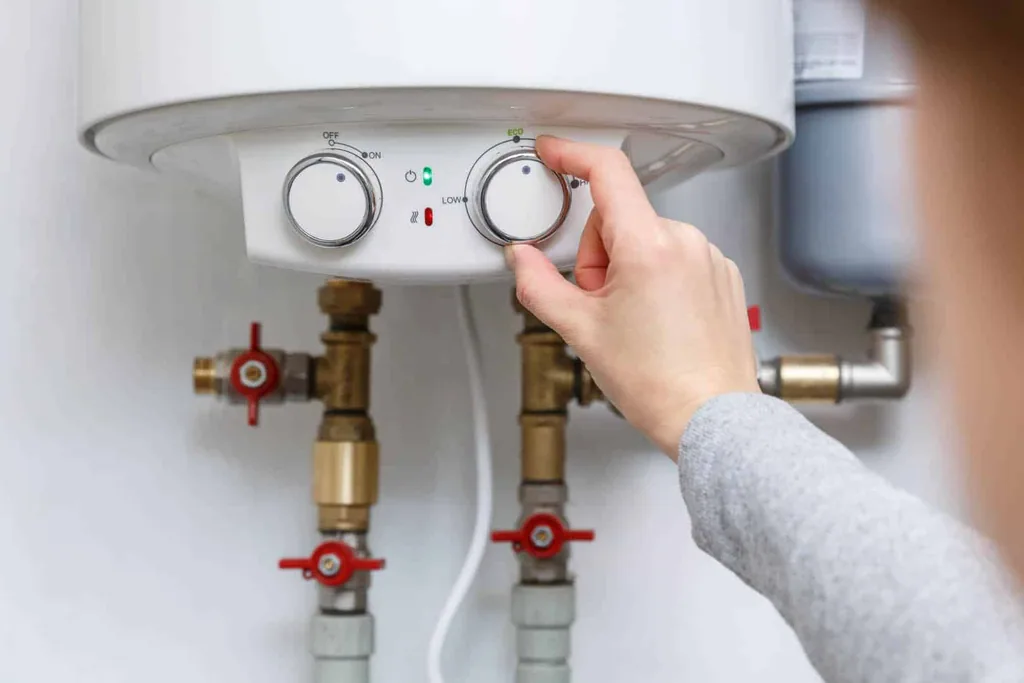
Before calling a plumber, you can narrow down the likely cause with a few checks:
Check How Many People Use Hot Water at the Same Time
If showers, laundry, and dishes overlap, even a correctly sized system can fall short. Stagger usage and see if the problem improves. If it does, the system is at its limit for your household’s demand pattern.
Note How Long the Hot Water Actually Lasts
A 250-litre electric storage system should deliver roughly 15 to 20 minutes of continuous shower time at standard flow rates. If hot water lasts only five minutes, a component failure is more likely than a capacity issue.
Listen for Unusual Sounds from the Tank
Rumbling, popping, or cracking from a storage tank indicates heavy sediment buildup. The heating element is essentially boiling water trapped beneath mineral scale. The tank needs flushing, or the element needs replacing.
Check the Water Temperature at the Tap
If the water is warm but not hot, the thermostat may be set too low, or the tempering valve may be over-mixing cold water. Bathroom taps should deliver water at around 50°C as regulated by current Australian plumbing standards. Lukewarm water points to a component issue, not a capacity issue.
Check the Age of Your System
Most storage hot water systems last 8 to 12 years. Electric systems in Adelaide’s coastal suburbs, like Glenelg, Henley Beach, and West Beach, may deteriorate faster due to salt air corrosion. If your system is past 10 years, efficiency losses are likely contributing.
Diagnostic Checklist
| Symptom | Likely Cause | Action |
| Runs out during peak use | Undersized system or high demand | Stagger usage or upgrade |
| Lasts less than 5 minutes | Failed element or broken dip tube | Call a licensed plumber |
| Rumbling or popping from the tank | Sediment buildup | Flush the tank |
| Lukewarm, never truly hot | Thermostat or tempering valve | Call a licensed plumber |
| Rusty or discoloured water | Internal corrosion | Call a licensed plumber |
| Water pooling around the base | Tank leak, likely end of life | Call a licensed plumber urgently |
Which Hot Water Systems Are Most Likely to Run Out?
The type of system you have determines how and why it runs out:
- Electric storage (most common in Adelaide): Fixed tank volume with slow recovery, three to four hours for a full reheat. The most likely type to run out during peak demand. Off-peak tariff models connected to SA Power Networks only heat overnight, meaning no mid-day recovery.
- Gas storage: Faster recovery than electric, roughly one hour, but still limited by tank volume. Sediment buildup and burner issues reduce capacity over time. Common in suburbs with gas connections like Norwood, Prospect, and Goodwood.
- Gas continuous flow (instantaneous): Heats on demand with no tank, so it technically never runs out. However, flow rate limits mean it can struggle with multiple simultaneous outlets. Two showers and a dishwasher running at once will drop the temperature noticeably.
- Heat pump: Highly efficient but heats more slowly than gas or electric element systems. According to energy.gov.au, heat pump systems use roughly 30% of the energy of a conventional electric system. In Adelaide Hills suburbs like Stirling and Blackwood, where winter temperatures drop below 5°C, heating times extend significantly. Tank sizing is critical for these locations.
- Solar with electric or gas boost: Depends heavily on the weather. Adelaide averages strong solar exposure, but consecutive overcast days in winter mean the booster does the heavy lifting. If the booster element is faulty or the tank is undersized, supply drops during cooler months.
For advice on which system suits your household, Exceed Plumbing’s licensed plumbers can assess your setup and recommend the right hot water system based on household size, usage, and energy source.
When Hot Water Running Out Means You Need a Licensed Plumber
Some hot water problems need professional attention. Here are the signs:
The Problem Started Suddenly
If the hot water supply dropped overnight rather than declining gradually, a component has failed. Faulty heating elements, broken dip tubes, and tripped thermostats cause sudden loss of capacity. This requires professional diagnosis.
You Hear Unusual Noises or See Discoloured Water
Rumbling from the tank, rusty or murky hot water, or water pooling around the base all indicate internal failure. A licensed plumber can assess whether repair or replacement is the better option.
Your System Is Over 10 Years Old
Efficiency declines significantly beyond 10 years. Anode rods corrode, elements degrade, and insulation deteriorates. Repair costs often approach replacement costs at this stage. A licensed plumber can advise whether upgrading to a heat pump or continuous flow unit makes better long-term sense.
What a Licensed Plumber Will Do
A qualified local Adelaide plumber will inspect the thermostat and heating elements, test the tempering valve, check for sediment and flush the tank if needed, inspect the dip tube and anode rod, and assess whether the system is correctly sized for your household. will inspect the thermostat and heating elements, test the tempering valve, check for sediment and flush the tank if needed, inspect the dip tube and anode rod, and assess whether the system is correctly sized.
In South Australia, all hot water system work must be performed by a licensed plumber under the Plumbers, Gas Fitters and Electricians Act 1995. A certificate of compliance (eCoC) must be issued within seven days, as outlined by the SA Office of the Technical Regulator.
One recent hot water job received this feedback: “Ever want the best plumber with amazing work ethics and great price, you will never be disappointed with Caleb from Exceed plumbing he goes above and beyond very nice man to deal with.” – Leticia Smart
Why Hot Water Problems Are Common in Adelaide Homes
Adelaide’s climate, housing stock, and energy infrastructure create conditions that make hot water issues more frequent:
- Ageing electric storage systems in older suburbs: Many homes built in the 1970s to 1990s in Mile End, Colonel Light Gardens, Goodwood, and Magill still have original or early-replacement electric storage systems. After 10 to 12 years, efficiency drops and failures become frequent.
- Hard water and sediment in Murray River supplied areas: Adelaide’s water supply draws partly from the Murray River, which carries higher mineral loads than reservoir water. Homes further from the reservoirs experience faster sediment buildup in hot water tanks. Annual flushing is especially important for these properties.
- Salt air corrosion on coastal systems: Hot water systems in Glenelg, Henley Beach, West Beach, and Semaphore face accelerated corrosion from salt air. External fittings, connections, and tank casing deteriorate faster, shortening system lifespan.
- Adelaide Hills winter temperatures affect heat pump performance: Heat pumps extract warmth from ambient air. In Stirling, Blackwood, and Mount Barker, winter temperatures regularly drop below 5°C, reducing efficiency and extending heating times. Correct sizing and placement are critical.
- Off-peak electric tariff limitations: Many homes with electric storage systems are on SA Power Networks off-peak tariffs. These systems only heat during designated overnight hours. If the household uses more hot water than the tank can store after one heating cycle, there is no mid-day recovery.
How to Prevent Your Hot Water from Running Out
Prevention saves money and avoids cold showers. Here are the most effective strategies:
Stagger Hot Water Usage During Peak Times
Avoid running the shower, dishwasher, and washing machine at the same time. Allow 20 to 30 minutes between high-demand activities for the system to partially recover. This is especially important for electric storage systems.
Schedule Annual Hot Water System Servicing
A licensed plumber should inspect the thermostat, test the tempering valve, check the anode rod, and flush the tank annually. Under current Australian plumbing standards, tempering valves require testing every 12 months. The SA Office of the Technical Regulator reinforces this requirement. Regular servicing extends system life and catches problems early.
At Exceed Plumbing, we recommend annual servicing for all storage systems and more frequent checks for systems older than eight years.
Upgrade to the Right Size System
If your household has grown or usage patterns have changed, the current system may be undersized. General Australian sizing guideline: 50 litres per person for electric storage, 40 litres per person for gas storage. For high peak demand, a continuous flow or heat pump system may be a better fit. Exceed Plumbing can recommend the correct solar hot water system or other system type based on your situation.
Insulate Exposed Hot Water Pipes
Uninsulated pipes lose heat as water travels from the system to the tap. Pipe insulation is inexpensive and reduces heat loss, especially during Adelaide’s cooler months. It also reduces the load on the system, extending its effective output.
Understanding Tempering Valves and Hot Water Delivery
A tempering valve directly affects how much usable hot water reaches your taps. Most Adelaide homeowners have never heard of it, but it is one of the most common causes of perceived hot water shortage:
- What a tempering valve does: It blends hot water from the tank (stored at 60°C or above) with cold water to deliver a safe maximum of 50°C at bathroom taps. This is a legal requirement under current Australian plumbing standards for all systems installed or replaced since 2013. Kitchen and laundry taps are typically excluded.
- How a faulty valve reduces hot water: If the valve sticks or its thermostatic element wears out, it over-mixes cold water. You get lukewarm output even when the tank is full and heating correctly. This is one of the most commonly missed causes of hot water running out quickly.
- Testing and replacement requirements: Tempering valves must be tested every 12 months by a licensed plumber. The valve itself has an approximate lifespan of five years. The SA Office of the Technical Regulator’s heated water temperature control advisory note outlines these requirements.
- Why this matters for Adelaide homes: Adelaide’s water hardness accelerates mineral buildup inside tempering valves, causing earlier malfunction. Homes with systems installed between 2013 and 2018 are now due for their first valve replacement. If your hot water feels like it runs out faster than it used to, but the system checks out fine, the tempering valve is the first component a plumber should test.

Adelaide Suburbs We Service
Exceed Plumbing services the entire Adelaide metropolitan area for hot water system repairs, servicing, and replacements. We cover Salisbury, Mawson Lakes, Morphett Vale, Norwood, Goodwood, Linden Park, Modbury, West Lakes, Fulham Gardens, Mount Barker, Blackwood, Paralowie, Elizabeth, Golden Grove, Noarlunga, Happy Valley, Prospect, Colonel Light Gardens, Magill, Burnside, West Beach, Stirling, Mitcham, and every suburb in between. We aim to reach you within the hour, 24/7.
Stop Running Out of Hot Water
If your hot water keeps running out and you cannot identify the cause, it is time for a professional diagnosis. Whether the issue is a failing element, an expired tempering valve, sediment buildup, or an undersized system, a licensed plumber can find it and fix it.
Call Exceed Plumbing on 0456 461 354 for a same-day hot water diagnosis across Adelaide.
- 24/7 service, aiming to reach you within the hour
- Fixed upfront pricing, no surprises
- Fully licensed and insured (Licence #333997)
- Guaranteed workmanship on every job
Frequently Asked Questions
Why is my hot water running out so quickly?
The most common causes are an undersized tank, sediment buildup reducing usable capacity, a faulty heating element, or a malfunctioning tempering valve. Adelaide’s ageing electric storage systems are particularly prone, especially in homes where the system is over 10 years old.
How long should hot water last in a storage tank?
A 250-litre electric storage system should provide roughly 15 to 20 minutes of continuous shower use. Gas storage recovers faster, typically within an hour. If hot water lasts less than five minutes, a component like the heating element or dip tube has likely failed.
Can a faulty tempering valve make hot water run out faster?
Yes. A stuck or worn tempering valve over-mixes cold water with the stored hot supply, making the water feel lukewarm even when the tank is full. Under current Australian plumbing standards, tempering valves must be tested annually and replaced approximately every five years by a licensed plumber.
What size hot water system do I need for my household?
As a general guide, allow 50 litres per person for electric storage or 40 litres per person for gas storage. A licensed plumber can recommend the correct size based on your household’s peak demand, number of bathrooms, and preferred energy source.
Why does my hot water run out faster in winter?
Incoming mains water is colder in winter, so the system works harder to reach the stored temperature. Heat pump systems also lose efficiency in cold weather, especially in Adelaide Hills suburbs like Stirling and Blackwood, where temperatures drop below 5°C. Off-peak electric systems struggle if overnight heating cannot fully replenish demand.
When should I replace my hot water system instead of repairing it?
If the system is over 10 years old, repair costs are becoming frequent, or the tank is leaking, replacement is usually the better investment. Modern heat pumps and continuous flow systems are significantly more energy efficient and may be eligible for small-scale technology certificates (STCs) that reduce upfront cost.