
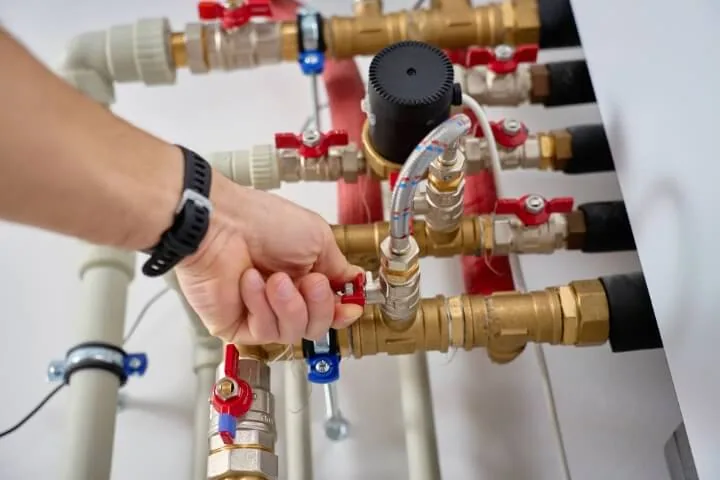
A tempering valve blends cold water into the hot water leaving your system, so showers, baths and basins receive no more than 50°C. The tank still stores water at 60°C or more to limit Legionella growth. A failing valve shows up as lukewarm, unstable or weak hot water, and AVG and RMC say it can’t be serviced, only replaced.
At Exceed Plumbing, we follow the Office of the Technical Regulator (OTR): tempering valves “must be tested every 12 months”, accurate within 3°C, and rectified or replaced when faulty. Tempering valves aren’t on SA’s DIY list, and AVG says a licensed plumber must install and adjust each one. This guide covers how the valve works, failure signs, testing and the OTR’s removal of the pre-19 October 1995 building exemption.
How a Tempering Valve Controls Hot Water Temperature
Dropping hot water from 60°C to 50°C stretches a child’s third-degree burn time from one second to five minutes, and a tempering valve is one device that makes that drop:
Those figures come from Table 1 of the OTR’s heated water advisory note, which puts an adult’s burn time at 5 seconds at 60°C. The same note cites a study of Australian and New Zealand burn centre admissions from 2010 to 2018. It found 92% of residential tap water scald injuries occurred in the bathroom, and 84% of people were bathing at the time.
Turning the tank down isn’t the answer. According to the Australian Building Codes Board, Legionella “grows in water at temperatures between 20°C and 45°C”. Its growth “is reduced significantly in water stored at 60°C and above”, which is why storage heaters run that hot.
A tempering valve settles the conflict between those two risks. It takes water stored at 60°C or more, mixes in cold, and sends no more than 50°C to the fixtures used for personal hygiene. Your hot water system stores water hot enough to limit Legionella, while the valve delivers it cool enough to limit scalds.
Tempering Valve vs Thermostatic Mixing Valve
Why would plumbers quote a tempering valve when a thermostatic mixing valve (TMV) sounds better? Both cap delivered heat, but TMVs are more precise and face stricter OTR maintenance rules:
| What the OTR sets | Tempering valve | Thermostatic mixing valve (TMV) |
| Mixed temperature accuracy | Within 3°C either way | Around 1°C either way |
| Testing | Every 12 months | Field tested every 12 months |
| Component replacement | No set interval; rectify or replace when not functioning | Critical components replaced at intervals not exceeding 5 years |
| Permitted for the 50°C limit in homes | Yes | Yes |
The replacement row is the one to read twice. That 5-year figure from the OTR applies to TMV components only, so any 5-year figure for a tempering valve comes from its manufacturer, not the regulator.
Homes fall under the 50°C rule, and the Plumbing Code of Australia list reproduced by the OTR permits four devices there. They are a TMV, a thermostatically controlled tap, a tempering valve or a temperature limited water heater. In a home, either valve meets that rule, so the real differences are the TMV’s tighter accuracy and its 5-year component regime.
Signs a Tempering Valve Is Failing
A shower that slowly loses its heat is a frustrating start to any morning, and AVG’s troubleshooting guide links tempering valve faults to blocked strainers, swinging pressures or incorrect settings:
One homeowner on a Reddit plumbing forum described their failed valve as “36c on all taps”, even after cleaning it. AVG’s installation instructions pair each symptom with a possible cause:
- Unstable temperature: fouled strainers or fluctuating supply pressures.
- Temperature changing over time: fluctuating pressures or debris in the strainers.
- Hot only or cold only at the tap: the valve set incorrectly, or cross-flow between the inlets.
- Reduced or no flow: blocked strainers or filters, fluctuating pressures, or a supply failure.
- No change when adjusted: hot and cold supplies connected the wrong way round.
- Noise: water moving through the valve too fast.
RMC’s HeatGuard manual sets a simple threshold. If the outlet reads more than 2°C from its commissioning temperature, RMC says to troubleshoot. Its troubleshooting table lists seasonal temperature variations as one reason to reset the valve.
Once a bathroom thermometer reading has drifted, book a hot water system repair rather than living with lukewarm showers.
More: Why Is My Hot Water Inconsistent? Causes and Fixes
South Australia’s Hot Water Temperature Rules for Bathrooms
Does every hot tap in a South Australian home need tempering? No: the OTR caps showers, baths, handbasins and bidets at 50°C, while tempering kitchen and laundry taps stays optional:
Table 2 of the OTR’s heated water note lists the kitchen sink and laundry trough as “Not mandatory (optional)”, because they aren’t “used primarily for personal hygiene purposes”. A stricter 45°C cap covers the residential parts of aged care buildings, health-care patient areas, early childhood centres, schools and designated accessible facilities.
South Australia’s old variation allowed hotter delivery in some existing installations, generally in buildings constructed before 19 October 1995. The OTR’s August 2026 advisory note now states: “There is no longer an exemption for temperature delivery control requirements provided in a building constructed prior to 19 October 1995.”
Under the OTR’s January 2025 note, a temperature control device is required when a water heater is first installed or replaced. Switching to a different type, such as an electric heat pump, counts too. That rule is why a shower can feel cooler after a new system goes in.
Replacing solar collectors or extending heated water to more fixtures also triggers it, but replacing a heater’s valve, element or thermostat doesn’t. Solar hot water needs extra care: the OTR says it can heat water beyond 93°C, calling for “specific high performance temperature control devices”.
Adjusting or Replacing a Tempering Valve in South Australia
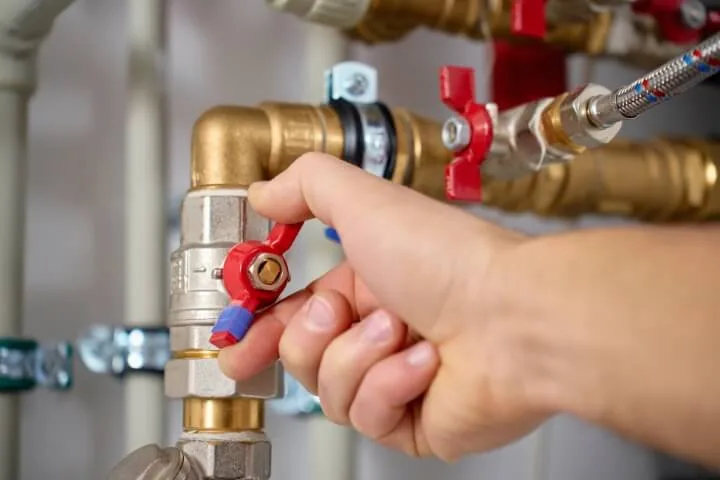
Two documents give a fast, reliable read on tempering valve work: SA’s DIY list doesn’t include tempering valves, and AVG says a licensed plumber must install and adjust each one:
The SA Government DIY list says a licensed plumber is required by law for “altering any pipework” and “installing or replacing a water heater”. That page doesn’t mention tempering valves either way. Its advice: “If you are not sure, contact the Office of the Technical Regulator.”
AVG’s TVA specification sheet says the valve “must be installed by a licensed plumber” and has “tamper proof adjustment”. Its installation instructions add that “EACH VALVE must be adjusted on site by the installer”.
Your plumber commissions the valve using the RMC and AVG method:
- Confirm the hot water system is delivering at least 60°C.
- Run the nearest outlet the valve supplies at 4 litres per minute or more.
- Let it run for at least one minute, then measure with a thermometer.
- Adjust, re-test and refit the cap.
Our plumbers at Exceed Plumbing commission valves this way. The 50°C outlet limit applies whether the water comes from a storage tank or a gas continuous flow system. From there, our licensed team issues the eCoC to you and the OTR within seven days.
More: Why Does My Shower Go Hot and Cold? How to Fix It
How Often a Tempering Valve Needs Testing and Replacement
A valve that drifts slowly is easy to miss, so the OTR’s rule that tempering valves “must be tested every 12 months” matters, while replacement advice comes only from manufacturers:
AVG, RMC and Tomson each ask for at least a yearly check. AVG wants more frequent checks with “bad or unknown water quality”, and RMC says the same for “poor or unknown water quality”.
Replacement advice differs by brand, and none of it comes from the OTR:
- AVG: “We recommend that it is replaced at intervals not exceeding 5 years,” calling the valve a “SAFETY VALVE”.
- Tomson 5213 series: replacement “after 5 years service” as a safety measure.
- RMC HeatGuard: check annually and replace on failure, with no fixed interval.
Testing belongs at the same outlet used for commissioning, which RMC says is recorded on the installation sticker. AVG and RMC both describe cleaning the strainers through the union connections, but the valve body can’t be serviced. In AVG’s words: “If the valve fails it must be replaced.”
More: Why Is My Hot Water Running Out Quickly? An Expert Explains
Conclusion on Tempering Valves
A tempering valve protects bathroom users from scalds without weakening Legionella control in the tank, and three points cover how yours should be set, tested and handled in South Australia:
- Temperature: Stored water stays at 60°C or above to curb Legionella, while showers, baths, basins and bidets get 50°C or less. Kitchen and laundry taps can run hotter.
- Testing: The OTR wants a test every 12 months, accuracy within 3°C and a faulty valve rectified or replaced. AVG advises replacement within 5 years and Tomson after 5 years, while RMC says replace on failure.
- Licensing: Tempering valves sit outside SA’s DIY list, and AVG says the installer sets each one on site. Buildings constructed before 19 October 1995 no longer have an exemption.

Adelaide Suburbs We Service
Our team at Exceed Plumbing tests, adjusts and replaces tempering valves on electric, gas, solar and heat pump hot water systems right across greater Adelaide, including in the following suburbs:
Linden Park, Golden Grove, Mawson Lakes, Morphett Vale, Fulham Gardens and Mount Barker.
We also handle Goodwood plumbing and Blackwood plumbing jobs, testing every valve at the outlet and lodging the eCoC afterwards.
Book a Hot Water Plumber in Adelaide
If your bathroom water runs lukewarm, swings between hot and cold, or hasn’t been tested in 12 months, book a licensed hot water plumber in Adelaide for a valve check:
- Lifetime Labour Warranty on our workmanship
- Fixed upfront pricing before any work starts
- Our own licensed team, with no subcontracting
- Aiming to reach you within the hour, 24/7
- SA plumbing contractor licence 333997
Call Exceed Plumbing on 0456 461 354 to have your tempering valve tested, adjusted or replaced, with the eCoC lodged for you.
Frequently Asked Questions About Tempering Valves
What does a tempering valve do?
A tempering valve blends cold water into hot water from the tank so bathroom fixtures receive no more than 50°C. The tank still stores water at 60°C or more to limit Legionella growth.
How do I know if my tempering valve is bad?
Lukewarm, unstable or weak hot water at bathroom outlets is a warning sign. AVG links these faults to blocked strainers, pressure swings or incorrect setting, and a valve that has failed must be replaced.
Can I adjust my tempering valve myself?
Tempering valves aren’t on SA’s DIY list, and AVG says each tamper proof valve is set on site by the installer. The bathroom limit is 50°C. If unsure, contact the Office of the Technical Regulator.
How often should a tempering valve be replaced?
It depends on the manufacturer: AVG recommends replacement within 5 years, Tomson after 5 years, and RMC says check annually and replace on failure. The OTR’s own rule is a test every 12 months.
Do I need a tempering valve for my kitchen and laundry?
No, it isn’t mandatory. The OTR lists temperature control at the kitchen sink and laundry trough as “Not mandatory (optional)”, because those fixtures aren’t used primarily for personal hygiene.
Does Exceed Plumbing test and replace tempering valves in Adelaide?
Yes. Our licensed plumbers test, adjust and replace tempering valves across Adelaide. We commission each one at the outlet to no more than 50°C and issue the eCoC within seven days.